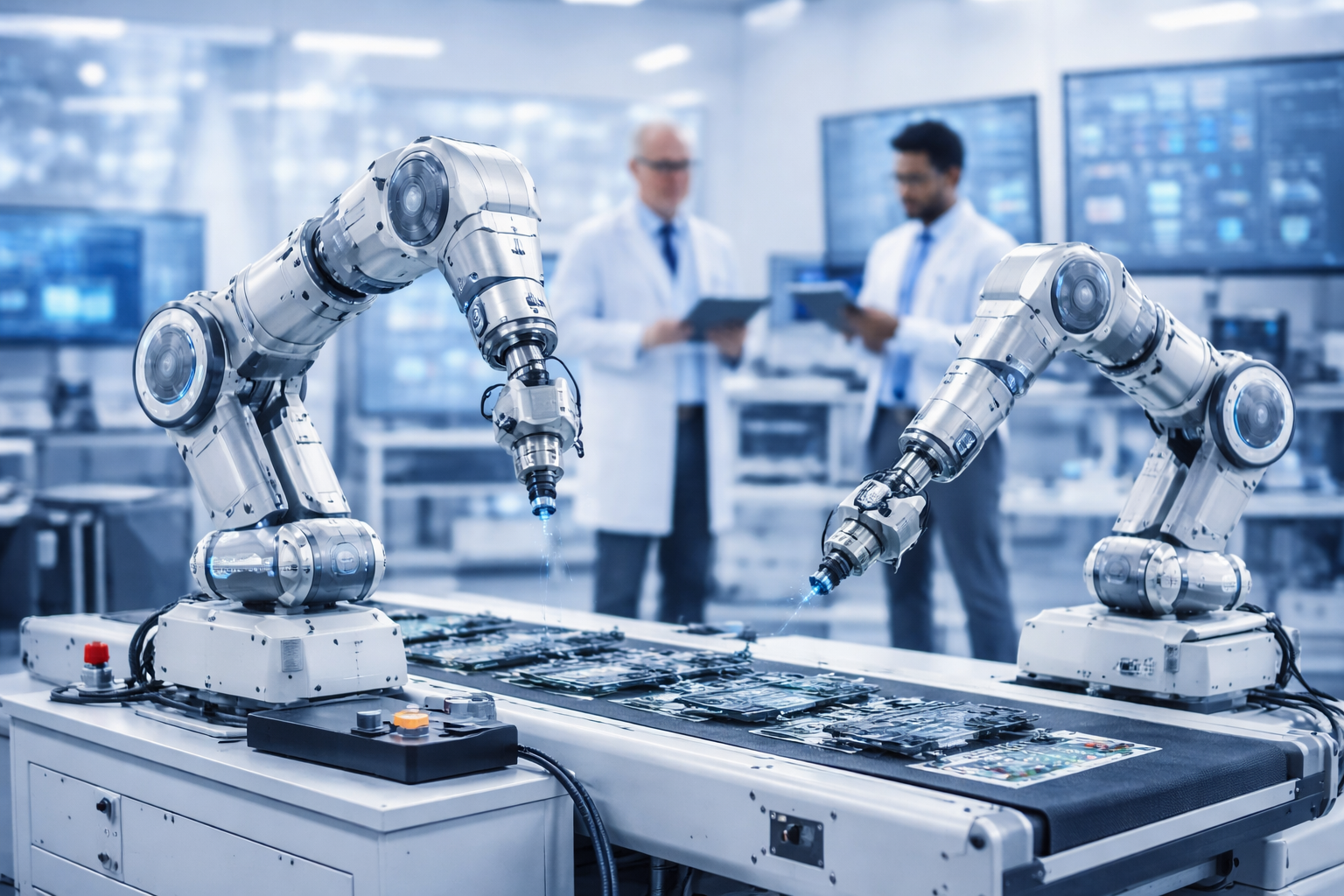
Advanced robotic systems and automation technologies
Industrial Robotics refers to the use of advanced robotic systems and automation technologies in manufacturing and industrial processes to improve efficiency, precision, and productivity. These robots are designed to perform repetitive, complex, and high-precision tasks with minimal human intervention.
Modern industrial robots are widely used in industries such as automotive, electronics, aerospace, and manufacturing, where they handle operations like assembly, welding, material handling, inspection, and packaging.
With the integration of Artificial Intelligence (AI), Computer Vision, and IoT, industrial robotics is transforming traditional factories into smart, automated production environments. These systems not only enhance production speed but also ensure consistency, safety, and cost-effectiveness.
Key Benefits
✔ High precision and accuracy
✔ Increased productivity and efficiency
✔ Reduced human error and operational costs
✔ Improved workplace safety
✔ Scalable and future-ready automation
Industrial Robotics refers to the use of advanced robotic systems and automation technologies in manufacturing and industrial processes to improve efficiency, precision, and productivity. These robots are designed to perform repetitive, complex, and high-precision tasks with minimal human intervention.
Modern industrial robots are widely used in industries such as automotive, electronics, aerospace, and manufacturing, where they handle operations like assembly, welding, material handling, inspection, and packaging.
With the integration of Artificial Intelligence (AI), Computer Vision, and IoT, industrial robotics is transforming traditional factories into smart, automated production environments. These systems not only enhance production speed but also ensure consistency, safety, and cost-effectiveness.
Industrial Robotics refers to the use of advanced robotic systems and automation technologies in manufacturing and industrial processes to improve efficiency, precision, and productivity. These robots are designed to perform repetitive, complex, and high-precision tasks with minimal human intervention.
Modern industrial robots are widely used in industries such as automotive, electronics, aerospace, and manufacturing, where they handle operations like assembly, welding, material handling, inspection, and packaging.
With the integration of Artificial Intelligence (AI), Computer Vision, and IoT, industrial robotics is transforming traditional factories into smart, automated production environments. These systems not only enhance production speed but also ensure consistency, safety, and cost-effectiveness.
Industrial Robotics refers to the use of advanced robotic systems and automation technologies in manufacturing and industrial processes to improve efficiency, precision, and productivity. These robots are designed to perform repetitive, complex, and high-precision tasks with minimal human intervention.
Modern industrial robots are widely used in industries such as automotive, electronics, aerospace, and manufacturing, where they handle operations like assembly, welding, material handling, inspection, and packaging.
With the integration of Artificial Intelligence (AI), Computer Vision, and IoT, industrial robotics is transforming traditional factories into smart, automated production environments. These systems not only enhance production speed but also ensure consistency, safety, and cost-effectiveness.